The Feeling of Incompleteness
So it started in 2023. I had been at my company for about two years by then. I was not feeling good about what I was doing at that time. Let me tell you.
I was building Umbraco CMS apps, I built 6 or 7 of them. Then there were 5 React projects I was maintaining, fixing bugs. I solved 150+ bugs across those projects. The work was real, people were using these apps, I was creating impact. But something was off.
The problem was that I had memorized everything. The errors, the syntax, the patterns, I could predict what would break before it broke. I was building the same kind of APIs over and over. Yeah the business units and logics were different, but the actual work felt identical. Like I was copy-pasting my own brain. I had this feeling that this is not enough, I need to gain more knowledge, I want to do more crazy things.
The Early Days - Why I Started Coding
So it all started in 2018. I always wanted to be an Aeronautical Engineer but due to financial problems I was given an option to do BCS. When I went to take admission to BCS I didn't even know what career options I have after completing this course. But when I went there I got to know that admissions are full now. They told me if you are interested there is another course called BCA, it's the same only. I was like okay I can do it because BCS course in other college was expensive. I took that position, I still remember they were taking 80 students per batch, I joined on 79 number. Initially I was not at all interested in this course, I wanted to become an Aeronautical Engineer, work on planes, etc. But fate planned something else for me.
Then I bought a laptop, my mom gifted me that laptop. It was difficult but she managed the EMIs. Now I had the laptop, I can do anything. I did what any 19 year old would do, I installed games in it. I started playing Far Cry Primal, CS:GO, PUBG. We had a clan of 4 people, we wanted to get into esports.
While playing PUBG I discovered some people play with hacks. I didn't understand how it works. Then my friend, he got one hack script for us to play. While messing with it I saw the code. Suddenly I realized I can read this code, understand it, because that's what I was learning in college. Then I tried to make one for us. I successfully made one script after getting banned on 2 accounts. That was the eureka moment for me.
Then I started building normal HTML websites. Just for fun and run them in college common server. So each one of us had a website now on college's server. It was cool to showcase.
I showed it to my friend who runs a hotel. He was like bro I know a guy, if you are interested I can arrange a call. I'm like sure. I connected with him, he offered me some XX money to build pages. He was running one Windows server and he used to create websites for local businesses. Money was not that much but I was like yeah this is a monetizable skill.
Corporate Reality
When I entered corporate I thought I will build crazy apps everyday, I'll be working on new problems. That was the life I imagined after watching cubicle series on YouTube. But here things were different. What you see on the internet and how things work in reality are completely different. Here we had to start working on features, then create documents, get in calls, understand the business. Then think how you can implement the solution.
Initially it was exciting. Everything was new, the codebase, the processes, the way enterprise apps are built. I was working across different tech stacks, not just one. React, .NET, Azure, and others depending on the project. I was building internal tools and enterprise apps, the kind of software that employees use every day to do their jobs. I was full of energy and I genuinely learned a lot in this phase.
But it crept in slowly. Not like a single moment where I woke up and thought "I'm bored." It happened over the full two years. One day you realize the error you're debugging feels familiar. Then you realize the API you're writing has the same structure as the last three you wrote. Every deployment starts feeling like a routine. I can't point to one meeting or one sprint where it clicked, it was more like a slow fog that settled in. I was still building things, but the spark was missing.
Chasing the Next High
I discussed this with my ex-manager. He saw that I was restless and he involved me in more complex projects where we had different cloud services involved. I was happy again.
One of the big ones was a parts registry catalogue for the manufacturing domain. This was a completely different beast. The hardest part wasn't the code, it was understanding the business. Manufacturing has its own language, its own logic. I had to learn how parts relate to each other, how catalogues are structured, what the business teams actually need from this system. Then I had to take all of that and think about it from a technical angle, database engineering, system design on the API layer, the UI. It involved everything.
I spent over 6 months on this kind of work and damn it was a crazy experience. I was learning again, I was challenged again. But here's the pattern I didn't see at the time, after those 6 months, the same feeling crept back. I had figured it out. The problems stopped being new. And once I understand something, I need the next thing.
Going Wide
Then I explored other tech stacks like Next.js, WebRTC, WebSockets, Kubernetes. All of this was on my own time, after work hours, weekends, late nights.
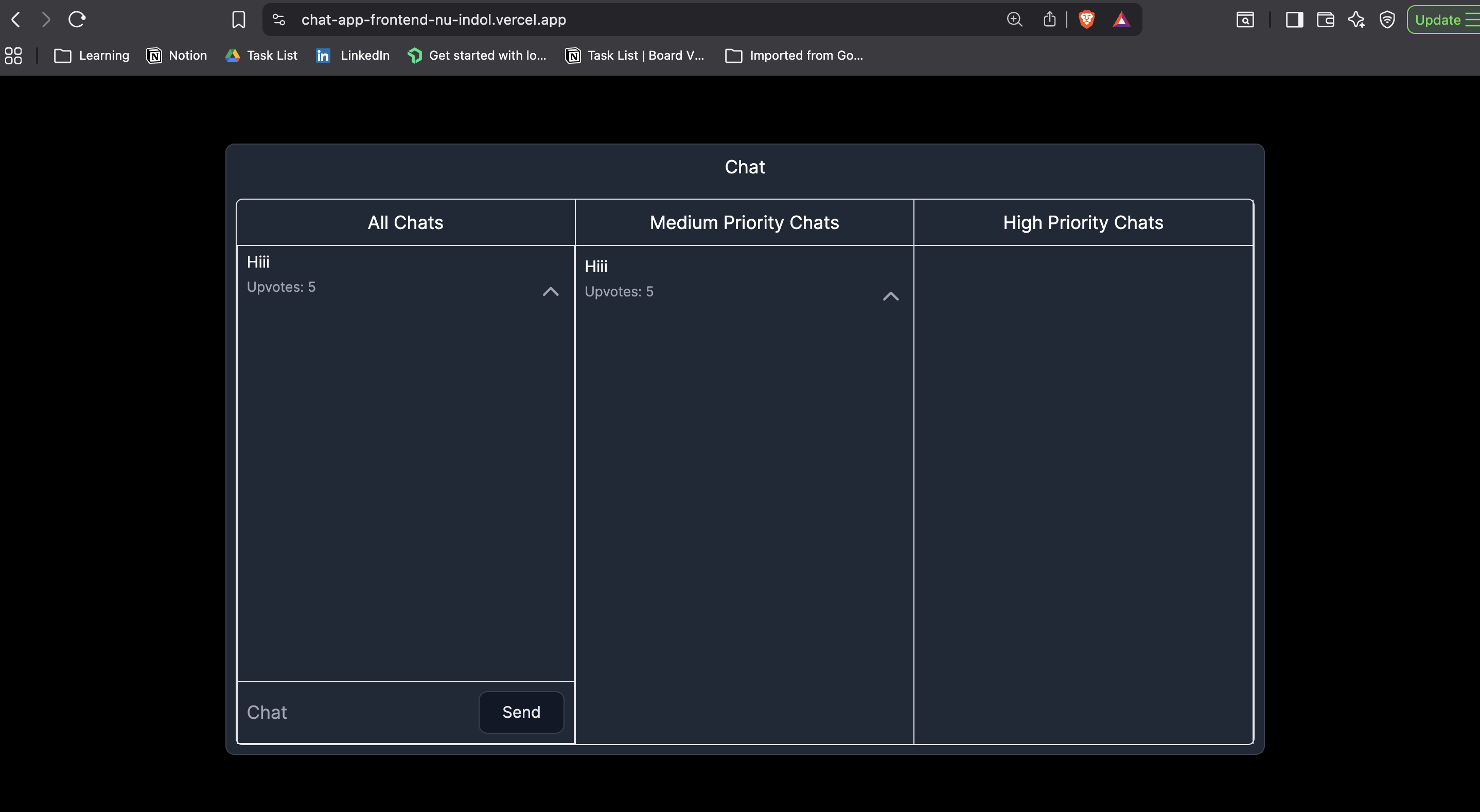
I saw a YouTuber build a chat app for his streams and I thought, I can build this. Maybe people who take online classes can use it. It was a simple idea, users join a room using a room ID, ask questions, and other users can upvote questions to push them into a priority queue. So the instructor knows which questions matter most. It was a lame idea honestly, but building it taught me a lot about real-time communication.
Then I discovered Gather Town. I looked at it and thought, I can build this from scratch. So I started. React + Phaser for the game engine on the client side, Colyseus game server on the backend, WebRTC for real-time communication. The whole thing was hard, the real-time sync, the video integration, the game engine, all of it. I never completed it end to end. My old laptop started giving up on me and I lost motivation somewhere in the middle.
Gather Town Clone - Architecture
 flowchart TB
    subgraph CLIENT["CLIENT (React + Phaser)"]
        direction LR
        UI["UI Layer<br/>React"]
        GE["Game Engine<br/>Phaser"]
        SM["State Management<br/>Zustand"]
        UI --> GE
        GE --> SM
        NET["Network Layer<br/>Network.ts<br/>WebRTC.ts"]
        SM --> NET
    end

    CLIENT --> |"WebSocket<br/>WebRTC"| SERVER["SERVER (Node.js)"]

    subgraph SERVER["SERVER (Node.js)"]
        direction LR
        CS["Colyseus Game<br/>Server"]
        LR["LobbyRoom<br/>(built-in)"]
        OR["SkyOffice<br/>Room"]
        MON["Monitor<br/>(/colyseus)"]
        OS["OfficeState<br/>Game State"]
        CS --> LR
        CS --> OR
        CS --> MON
    end
After this I built a serverless app using Hono.js which emulates how blockchain works in real time. Built an Ethereum wallet, Solana wallet. Then I tried to do some open source contributions to cal.com but they have a very active repo. I was doing things from my old Windows laptop, by the time I fix the bug in local, someone has already raised a PR.
Then I built some really good projects in my office which I cannot share here but they were really good.
All of this was me trying to find that feeling again. I was going wide instead of deep, jumping from tech to tech, hoping something would stick. But after doing this for a while the same feeling came back. What now? Hello darkness my old friend.
The Moment It Clicked
In November 2024 my manager assigned me a task, build a POC on natural language to SQL.
The idea was to build a search engine for business people where they can ask questions in plain English and get answers in real time, rather than waiting for weekly reports or dashboards to get updated. I had no idea what I was getting into. I didn't know what RAG was. I didn't know how LLMs actually worked under the hood. But I said yes and started reading.
I read about RAG, found Vanna AI, and started building. The first POC took me about a week. I used Azure AI Models and AI Search for the first version and it worked. Then I tried the second approach, ChromaDB, Ollama model, deployed to EC2. That one was painful. It was not scalable, not fast enough, and I spent hours debugging things I barely understood. But damn, even the painful parts felt exciting. That's how I knew this was different.
The real turning point wasn't the POC itself though. It was when I started reading about how RAG actually works internally. How documents get chunked, embedded, stored in a vector database, and retrieved based on semantic similarity. I was like, wait, this is how it finds relevant information? This is how context gets injected into a prompt? My brain exploded. I take 2 hours to write some APIs, and these models are doing it in seconds. HOW?
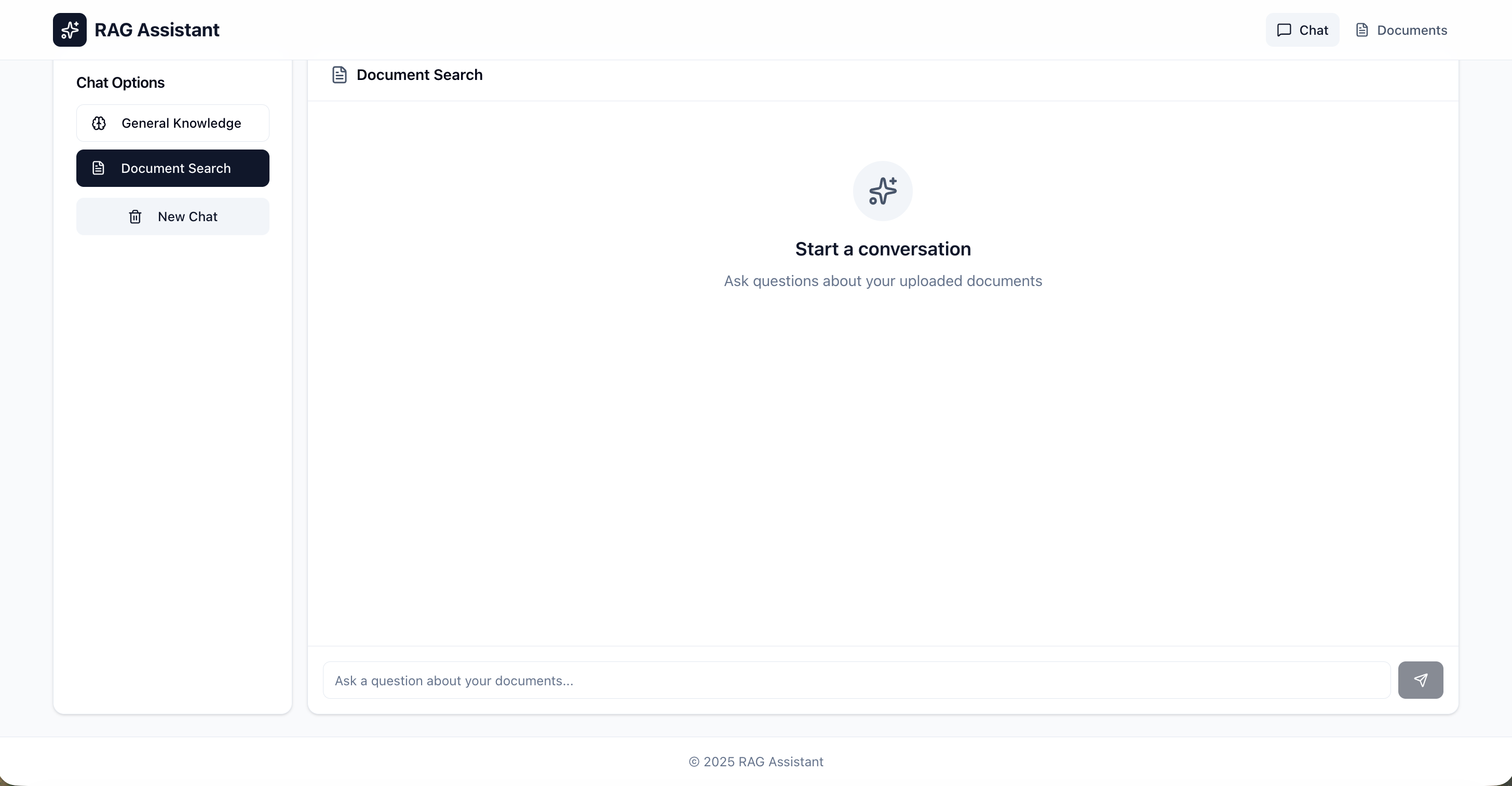
That question sent me down a rabbit hole. After work hours, on weekends, I started reading everything. ANN, RNN, CNN, Transformers, I went all the way back to the basics. Then RAG architectures, multi-agent systems. I couldn't stop. Then I built a basic app where you can upload PDFs and talk with them.
This is where the project started:
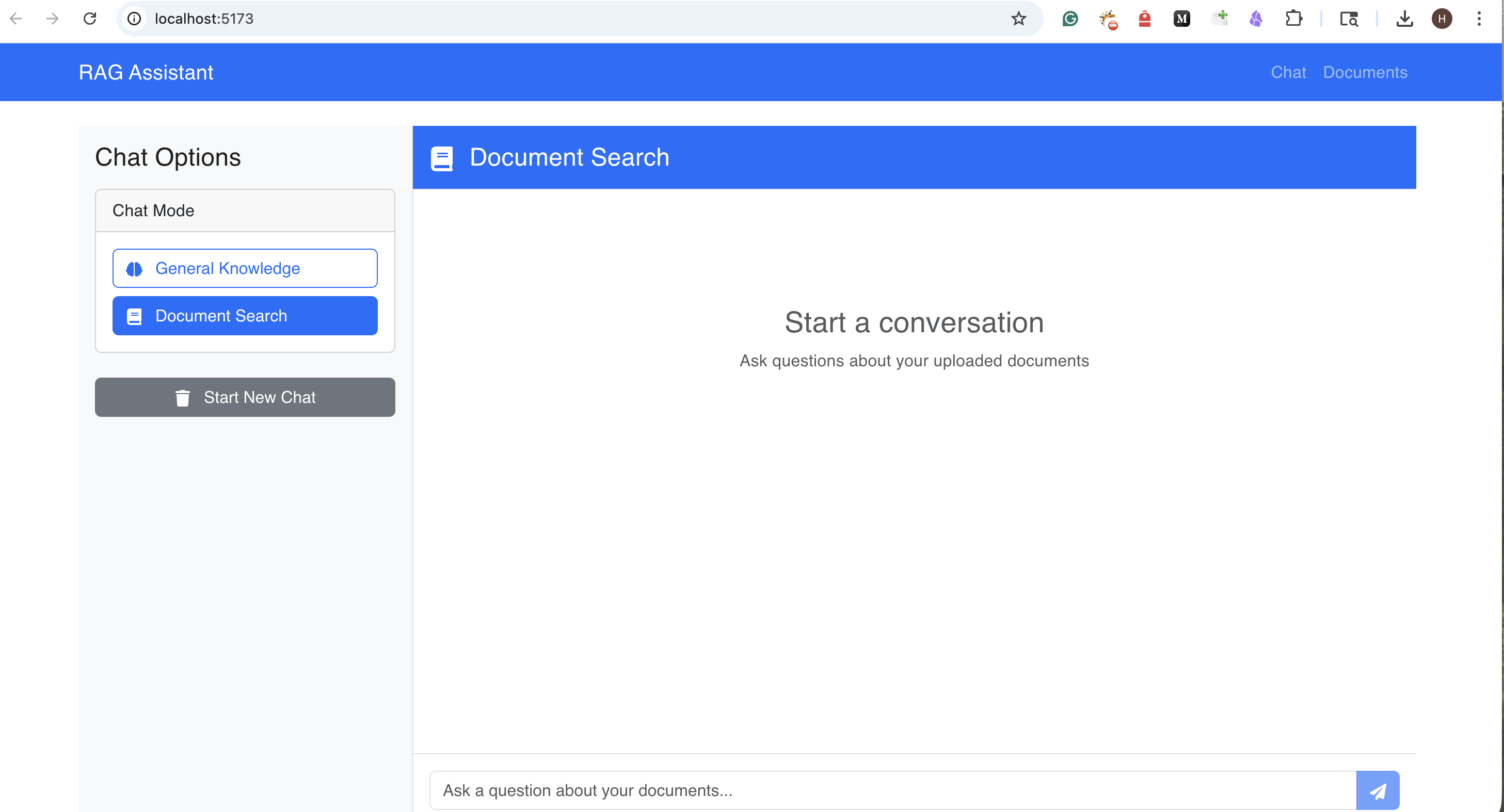
This is where I stopped building it. Sometimes I feel maybe I should revive this project and implement all the latest RAG strategies I have learned and are available in market.
The Decision
After a few days there was an opening in my company for an AI Engineer role. I reached out to the hiring manager (who is now my current manager), gave the interview, he gave me a case study to work on. I did it in 2 days. Then he selected me.
But here's the twist, I was up for a senior promotion. This was my dream. When I walked into my office on 11 November 2021, I had decided that I'll be a senior one day here. That was the goal. And now, right when it was about to happen, I had to choose between being an AI Engineer or a Senior Application Developer.
I was confused. I called my friends. The reactions were mixed. Some of them told me "bhai paisa dekh, Senior Application Developer makes more than AI Engineers." They weren't wrong, on paper, the SDE2 role paid better. A couple of others said go for it, the AI field is new, there's opportunity. But most of the advice leaned towards taking the safe option.
Here's the thing though, I never wanted to be an engineer for name's sake. I never cared about having "Senior" in my title. I got into engineering purely out of curiosity. To understand how systems are built. How search works, how a terminal was built. How a browser understands the cursor points and moves. That kind of thing. The title was never the point.
I took a weekend to think on it. No pros and cons list, no spreadsheets. I just sat with it and went with my gut. I kept coming back to this thing Naval Ravikant said, "Be best at what you like because no one can be best at being you. Money will follow." And my gut was telling me that I hadn't felt this excited about something in years. The NL-to-SQL project, the RAG rabbit hole, the late nights reading about transformers, that was the feeling I had been chasing since 2018. Why would I walk away from it for a title?
So I made the decision and moved to the AI role.
What Actually Changed
To be honest, I was scared at first. But damn this field is so good.
Everything is so fast and new. Everyday I learn something new. Sometimes I learn 4-5 things in a day.
My first project was building a multi-agent system. From there I went on to create MCPs, agents, proper document extraction pipelines, RAG pipelines, agentic RAGs, Graph RAG. Learned a lot about ML, DL, memory systems. Still learning.
But let me be honest, the transition wasn't smooth. The first few weeks were rough. The pace of change in AI is insane. A framework you learn on Monday might have a breaking update by Friday. There are no standard processes like traditional development. No well-established patterns you can rely on for years. Everything is experimental.
And my developer mindset kept clashing with how AI work actually happens. As a developer, I was trained to plan everything upfront, get clear requirements, then build. In AI, the problems are ambiguous. You don't always know what the output should look like. I kept trying to optimize too early instead of just shipping a V1 and iterating. I had to unlearn a lot of habits that made me good as a developer but were slowing me down as an AI engineer.
There was some imposter syndrome too. Everyone in the AI space seemed to know more than me, people throwing around terms I'd never heard of, papers I hadn't read. But the excitement outweighed it. I was genuinely having fun again, and that carried me through the uncomfortable parts.
About a month or two in, it clicked. I stopped feeling like a developer pretending to be an AI engineer and started feeling like I actually belonged.
The experience I had as a developer helped me more than I expected though. Not technically, it was more about mindset. I know how to build production-ready apps. I know SDLC. I understand the business side from my manufacturing days. Most AI engineers come from research or ML backgrounds, they can build great models but sometimes struggle with shipping reliable software around those models. That's where I fit in. I know AI and business and SDLC. I'm like a full package.
Even after using vibe coding tools, the experience of being a developer from the pre-GPT era helps a lot.
Closing - Would I Recommend It?
If someone asks me, "Hrushi, should I move to an AI role?"
I'd ask, are you open to changes? Can you build on any framework? Are you willing to put in hours and break your head almost every day?
If yes, then this is the field you should be in. Every day, new discovery. You are always learning. And the community is super open and helpful. This field is really good if you are curious and open to changes, because it's new, there are no standard frameworks or processes like traditional development. You have to be comfortable with ambiguity.
If I could go back and tell 2023 Hrushi two things, it would be this: don't stress about the money, and those developer years weren't wasted, they were preparation. Every React app I built, every .NET API I wrote, every manufacturing problem I solved, all of it is making me better at what I do now. The path made sense, I just couldn't see it while I was on it.
I don't know what I'll be building six months from now and that's exactly the point. This field moves so fast that the thing I'm most excited about probably hasn't been invented yet. And that feeling, of not knowing what's next but wanting to find out, that's the feeling I was chasing since 2018.
I finally found it.
Keep experimenting. That is a must in this field.